 Dog Sledding Fairbanks
Dog Sledding Season in Fairbanks, Month by Month
Last reviewed September 2026
November 1 to April 20 is the dog sledding season Alaska kennels around Fairbanks publish on their own listings, and the five and a half months inside it are not one experience repeated six times. January brings the coldest air of the year and the shortest patience for weather delays. February and March pair a full snowpack with daylight that is climbing back toward equilibrium. November and December open the season on the year's darkest days. This page covers what actually changes month to month behind the sled tours out of Fairbanks compared on this site: cold, daylight, aurora overlap and the trade-offs of booking early versus late. The season chart itself, with crowd and price signals side by side, lives on the Fairbanks season chart; this page is about the reasoning behind it.
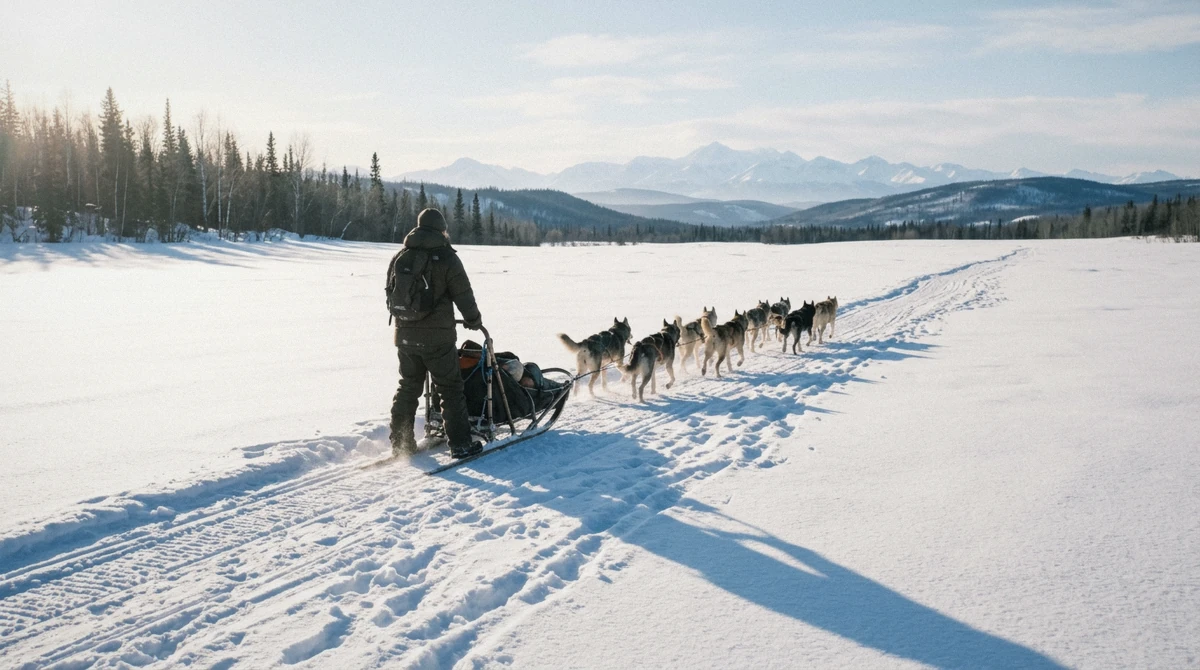
Quick answer November 1 to April 20: and why February and March are the strongest six weeks in it
The dog sledding season Alaska visitors plan around runs November 1 to April 20, based on the season window Fairbanks operators state on their own listings. Inside that window, February and March give the best combination of full snowpack and returning daylight. January is the coldest month of the year and carries the most cold-related cancellation risk. November and December open the season on the shortest, darkest days.
Key takeaways
- November 1 to April 20 is the published season; February and March pair the deepest remaining snowpack with the fastest-returning daylight
- January averages -23°C (-10°F), the coldest month of the year, and carries the highest cold-cancellation risk of the season
- Daylight bottoms out at almost four hours on the December solstice, then grows six to seven minutes a day
- Aurora season runs August 21 to April 21, overlapping almost the entire sled season, which is why the Moonlight Dog Sled, Dinner and Northern Lights run exists as its own tour
- Outside the snow window, Fairbanks kennels switch dogs to wheeled carts, not sleds. See what actually runs in summer below
The Season at a Glance
The table below lines up all twelve months against the November 1 to April 20 season window that Fairbanks operators publish and the National Weather Service Fairbanks averages for temperature, so you can see at a glance which months carry a sled and which don't.
Twelve months, one six-month season
Six months carry snow deep enough for a sled. The other six belong to green Fairbanks, when the same kennels either go quiet or, in a few cases, hitch the dogs to a wheeled cart on dirt instead. Reading the table: "Verdict" is the one-line takeaway, "Snow and trail" tells you what's actually under the runners, and "Daylight" is relative to the December solstice, the shortest day of the year here.
| Month | Temperature | Snow and trail | Daylight | Verdict |
|---|---|---|---|---|
| January | -23°C (-10°F) average | Full snowpack, coldest of the year | Recovering fast, about five hours by mid-month | Best snow, riskiest cold |
| February | -19°C (-2°F) average | Full snowpack, settling | Climbing quickly toward equinox length | Best window opens |
| March | -11°C (12°F) average | Full snowpack, milder days | About twelve hours at the equinox | Best overall |
| April | 0°C (32°F) average | Season closes April 20 as trails soften | Long and bright | Season closes mid-month |
| May | 10°C (50°F) average | No snow | Long summer daylight | No sledding: wheeled carts only |
| June | 16°C (61°F) average | No snow | Near-continuous daylight | Off season for sleds |
| July | 17°C (63°F) average | No snow | Long daylight | Off season for sleds |
| August | 14°C (57°F) average | No snow; aurora season begins August 21 | Shortening after midsummer | Aurora returns, still no snow |
| September | 7°C (45°F) average | No snow | Shortening toward equinox | Off season for sleds |
| October | -5°C (23°F) average | First snow accumulating, not yet open | Shortening past equinox | Pre-season, tours not yet running |
| November | -16°C (3°F) average | Season opens November 1 | Falling toward the December solstice | Season opens |
| December | -22°C (-8°F) average | Full snowpack | Bottoms out at almost four hours on the solstice | Coldest daylight, strong opening |
Best Month by Traveller Type
If You're going for the first time and want the least drama
February or March, when the snowpack is deepest and settled and the air is milder than January's -23°C average
If You want photographs with real daylight in them
Late February into March, close to the equinox's roughly twelve hours, with snow still fully covering the ground
If You're travelling with young children
Late February through March, the mildest daytime cold of the season, which matters more for a small rider than for an adult
If You want sledding and the northern lights on the same trip
November through February, deep inside the August 21 to April 21 aurora season and paired with the longest, darkest nights. The evening run built around exactly this runs through this window
If You're booking on a budget
Prices in this catalogue don't shift by month, so the budget move is picking the shortest listed run, the 30-minute North Pole sled, rather than waiting for a cheaper season that doesn't exist
November and December: the Season Opens
The season opens November 1, on the same week Fairbanks loses most of its remaining daylight.
Early snow, short days
November averages -16°C (3°F) and December -22°C (-8°F), both mild by January's standard even though neither feels mild on the trail. Snow typically covers the ground reliably enough for sledding from the published November 1 start, though the very first week or two of the season can still run thin in a slow snow year.
Daylight is the defining fact of this stretch. It falls through November and bottoms out at almost four hours on the December solstice, around December 21. Tours still run on schedule; a short winter day just means an afternoon booking starts and ends closer to dusk than it would in March. Reviewers on the evening moonlight run get the benefit of this: the sky is dark enough for aurora-watching by early evening, not late at night.
January: the Coldest Weeks
January is the coldest month of the Fairbanks year by a wide margin, and the month where a published cold cut-off is most likely to matter.
-23°C on an average day, and colder on a bad one
January averages -23°C (-10°F), four degrees colder than December and colder than any other month on the calendar here. Interior Alaska's winter of 2025-26 carried prolonged spells below -40°F on top of record snowfall, and January is exactly when a cold snap like that tends to land.
Snow conditions in January are usually the best of the season: deep, settled and cold enough to stay dry and fast underfoot. The trade-off is that several kennels publish their own cold-weather cut-offs, and January is the month those thresholds actually get tested. What each operator states as its cut-off, and what happens if a tour is called for weather, is covered on its own page rather than repeated here.
Daylight is recovering by January, gaining roughly six to seven minutes a day since the solstice, and reaching about five hours and twenty minutes by mid-month. Pack for the cold seriously in this window; what to actually wear on a Fairbanks sled tour is its own page for a reason.
February and March: the Best Window
If one stretch of the season deserves to be called the best time to go, this is it.
The month that answers "which month is best"
February averages -19°C (-2°F) and March -11°C (12°F), both meaningfully milder than January while the snowpack is still full and settled. Daylight is the other half of the case: it climbs quickly through February and reaches about twelve hours at the March equinox, more than double what November or December offer at the same hour of the tour.
That combination, mild-for-winter cold plus real daylight, is why February and March carry the heaviest demand of the season. Nothing about pricing changes with the calendar in this catalogue, but trail conditions and comfort both improve here relative to the deep-winter months on either side. The day trip to Borealis Basecamp, an 8-hour outing that pairs an hour of sledding with a reindeer visit, runs its full itinerary comfortably in this window; that same trip is the one most exposed to a low-snow year, since its own listing states it substitutes UTVs for sleds if there isn't enough snow on the ground.
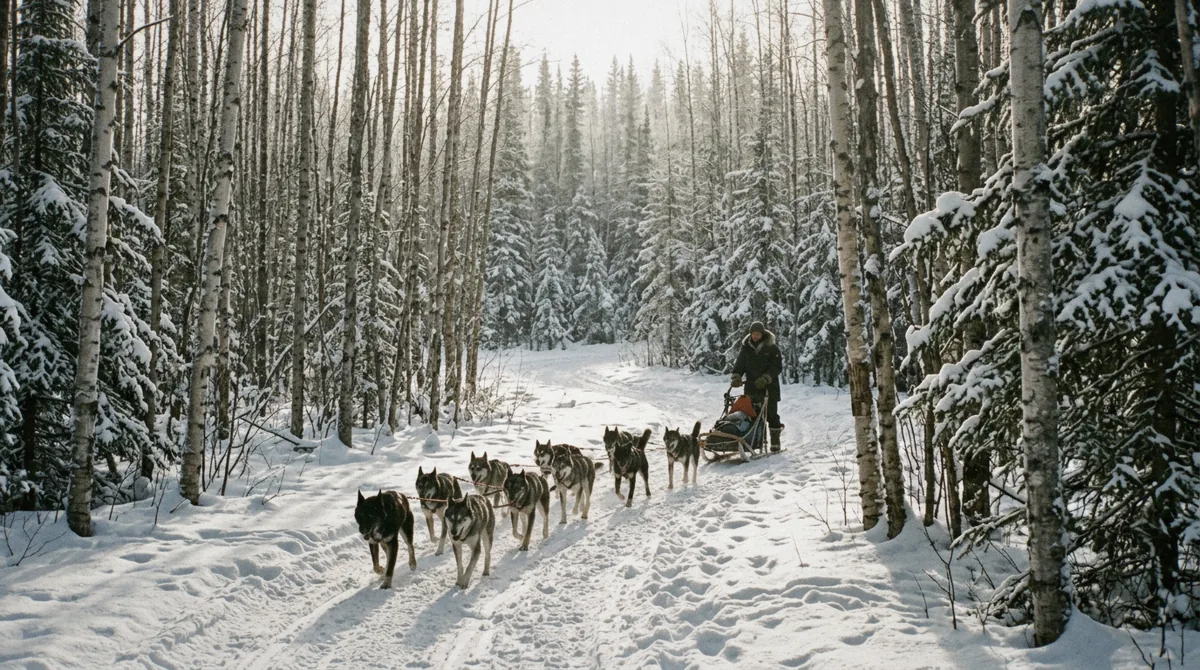
April: the Season Closes
April is the shoulder month, and the season ends mid-month rather than at the calendar's end.
Warming fast, closing on schedule
April averages 0°C (32°F), the freezing line, and the published season for the operators in this catalogue ends April 20. Trails soften as the month goes on, and the same daylight that made March pleasant is now long enough that an afternoon tour runs in full daytime light from start to finish.
Early April can still deliver solid snow, especially after a heavy winter, but the back half of the month is a genuine gamble. Anyone planning a trip for late April should check a specific tour's own page for its exact closing date rather than assuming every operator runs to the same day.
What Actually Decides Whether a Tour Runs
Two things end a sled tour early in Fairbanks: not enough snow, and too much cold.
Snow and cold, not rain
Snow cover is the baseline requirement, which is why the published season window sits between November 1 and April 20 in the first place. Cold is the other variable, and it's an operator-by-operator decision rather than one industry rule: the published cut-off temperatures, and what happens to a booking if a tour is cancelled for either reason, are covered in full on their own page rather than repeated here.
Daylight, Month by Month
The temperatures below are National Weather Service Fairbanks averages; the daylight figures come from Alaska.org and the Fairbanks Daily News-Miner's reporting on the solstice and equinox, plus the roughly six-to-seven-minutes-a-day recovery rate that follows the solstice. Check the current forecast close to your dates rather than treating these as a guarantee.
Why the season isn't one long winter
Daylight, not temperature, is the variable most visitors underestimate. A tour booked in December and the same tour booked in March can start at the same clock time and look completely different, because March simply has more sun in the sky.
| Month | Average temperature | Daylight |
|---|---|---|
| November | -16°C (3°F) | Falling toward the December solstice |
| December | -22°C (-8°F) | Bottoms out at almost four hours on the solstice, around December 21 |
| January | -23°C (-10°F) | Recovering six to seven minutes a day; about five hours twenty minutes by mid-month |
| February | -19°C (-2°F) | Climbing quickly toward equinox length |
| March | -11°C (12°F) | About twelve hours at the equinox, late March |
| April | 0°C (32°F) | Well past equinox length, long bright afternoons |
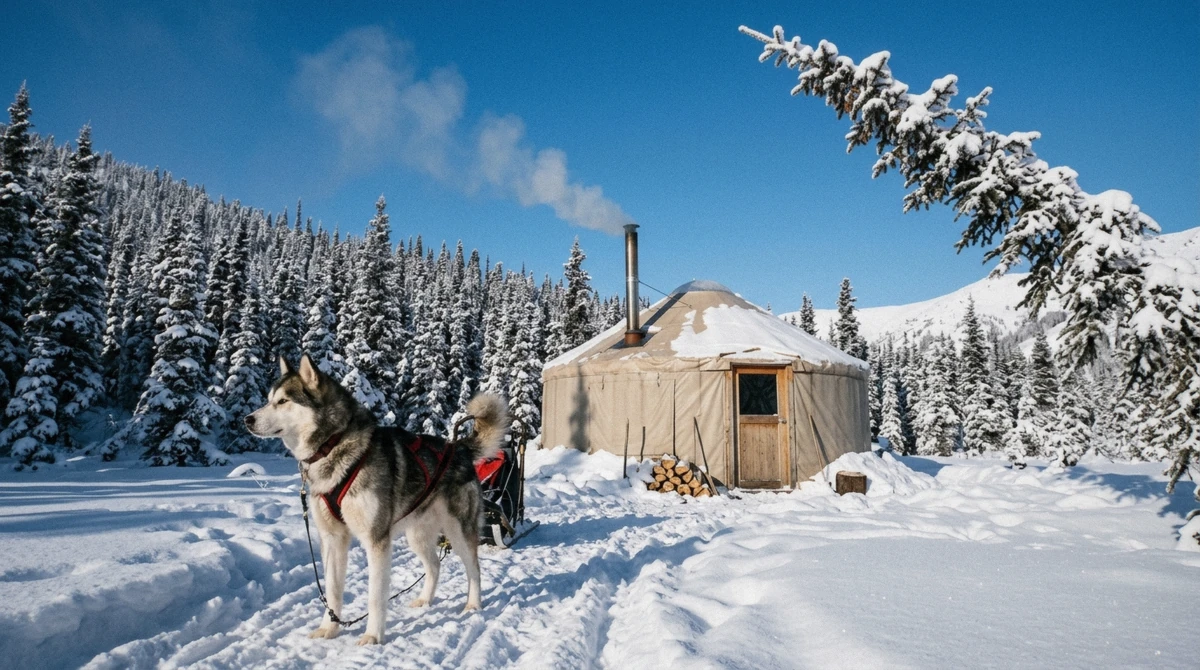
Sledding and the Aurora in the Same Trip
The overlap between the sled season and the aurora season is close to total, which is why one tour in this catalogue is built specifically around it.
Two seasons, almost one calendar
Aurora season in the Fairbanks area runs August 21 to April 21, under the auroral oval the city sits beneath. On clear, dark nights the lights are visible on about four nights out of five, and staying three or more nights while going out late pushes the odds of seeing them above 90 percent, according to Explore Fairbanks' own tracking. Live conditions on any given night come from the University of Alaska Fairbanks Geophysical Institute's aurora forecast.
That window covers essentially the entire dog sledding season, November 1 to April 20, which is why the Moonlight Dog Sled, Dinner and Northern Lights tour exists as its own evening product rather than an add-on: it times a sled run and a heated-yurt dinner to the same dark sky the forecast is tracking. November and December offer the longest stretch of darkness to watch from; February and March trade some darkness for milder temperatures while staying well inside the aurora window.
Summer: What Runs When There Is No Snow
Dog sledding, in the literal sense of dogs pulling a sled over snow, does not happen in Fairbanks between roughly late April and late October.
Carts, not sleds
Sled dogs still need to train and stay in condition through the ice-free months, and kennels across Alaska commonly answer that by switching the same dogs to a wheeled cart on packed dirt trails instead of a sled on snow. It's a genuinely different ride: a cart doesn't glide the way a sled does, and the trail is dust rather than powder.
None of the tours compared on this site run through summer; every listing here is a winter sled tour timed to the November 1 to April 20 window above. Anyone specifically hunting a summer wheeled-cart experience should confirm directly with a kennel whether it offers one, since that's a separate product from anything reviewed on this page.
When to Book
How far ahead to book depends more on which window you want than on the season as a whole.
Book the window, not just the date
February and March carry the heaviest demand of the season, since they combine the mildest cold with the most daylight, so a tour timed to that stretch is the one most worth locking in early. One operator in this catalogue confirms bookings up to 48 hours out, subject to availability, which is a useful reminder that "available next week" isn't guaranteed even off-peak.
Most listings here carry free cancellation up to 24 hours before the start, which lowers the cost of booking early: reserving a February slot in advance and rescheduling later if a cold snap arrives costs nothing in most cases. One tour in the catalogue is sold non-refundable, so check a specific listing's terms before treating that flexibility as universal. The cancellations page covers exactly what changes, and what doesn't, when a tour has to move.
Season and Timing Questions
When does the Fairbanks dog sledding season start?
November 1, based on the season window operators in this catalogue publish on their own listings. The very start of the window can run thin on snow in a slow year, and the season closes April 20.
Is dog sledding available in Alaska during the summer?
Not in the form reviewed on this site. Kennels across Alaska commonly keep dogs conditioned in summer by switching them to a wheeled cart on dirt trails instead of a sled on snow, but none of the tours compared here run through the ice-free months; every listing is a winter sled tour.
Can you see the northern lights and go dog sledding on the same trip?
Yes, and the two seasons almost fully overlap: aurora season runs August 21 to April 21, covering essentially the entire November 1 to April 20 sled season. The Moonlight Dog Sled, Dinner and Northern Lights tour is built specifically for this, timing an evening sled run and dinner to the dark sky.
How far ahead should you book a Fairbanks sled tour?
Earlier for February and March, the season's busiest window, since it combines the mildest cold with the most daylight. One operator confirms bookings only up to 48 hours ahead subject to availability, and most listings carry free cancellation up to 24 hours out, which makes booking early low-risk.
Is January too cold to go dog sledding in Fairbanks?
It's the coldest month of the year, averaging -23°C (-10°F), and the month where a published operator cold cut-off is most likely to actually trigger. Tours still run on most January days; each operator's own published cut-off is listed here.
How much daylight do you get on a winter dog sledding tour?
It depends entirely on the month. Almost four hours total on the December solstice, growing six to seven minutes a day afterward, about five hours twenty minutes by mid-January, and roughly twelve hours by the March equinox. A February or March afternoon tour runs in real daylight; a December one runs closer to dusk.
The single-month version of this answer is February or March. The honest version is that the six months of the Fairbanks season trade the same handful of variables against each other: cold, daylight, aurora darkness and snow depth. November and December give you the longest nights for the aurora and the shortest afternoons for photographs. January gives the best snow and the worst cold. February and March split the difference and, for most travellers comparing the Fairbanks sled runs compared on this site, come out ahead.
Once the month is settled, the Fairbanks sled tour list shows which runs operate through it and what each one includes.